





Art at RGIA
SAMPURNA RAMAYANA& BHAGAVATAM:
Artist: Siva Prasad Reddy | Curated by: Art Curated under Art Program by GHIAL
Artwork description in English
"रामायणं महाभारतं च, भगवद्गीता च धर्मस्य मार्गं दर्शयन्ति। सत्यं, धर्मं, प्रेमं च, जीवनस्य मूलं वदन्ति।"
Artwork description in Hindi
"రామాయణం మహాభారతం చ, భగవద్గీతా చ ధర్మస్య మార్గం దర్శయంతి। సత్యం, ధర్మం, ప్రేమం చ, జీవనస్య మూలం వదంతి।"
Artwork description in Telugu
"Rāmāyaṇam Mahābhāratam ca, Bhagavadgītā ca Dharmasya Mārgam Darśayanti. Satyam, Dharmam, Premam ca, Jīvanasya Mūlam Vadanti."
Sampurna Ramayana & Bhagavatam
A Monumental Kalamkari Masterpiece
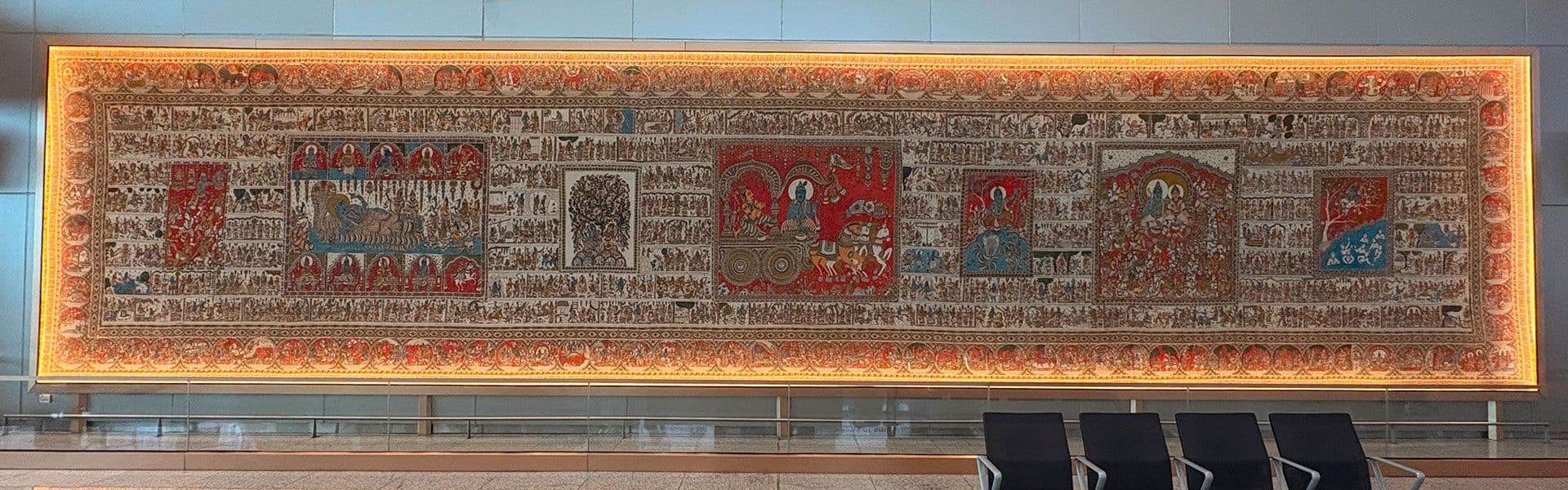
Standing before “Sampurna Ramayana & Bhagavatam” is not merely an act of viewing a painting it is an immersive spiritual and artistic journey that unfolds across time, devotion, and extraordinary human perseverance. Stretching across an awe inspiring 47 feet in length and 11 feet in height, this monumental Kalamkari painting is a living testament to patience, faith, and unmatched craftsmanship.
Created by Sri Siva Prasad Reddy, a master Kalamkari artist from Tangutur village, Nandyal District, Andhra Pradesh, the painting represents the culmination of a lifelong devotion to traditional Indian art. What the viewer sees today is the result of two relentless years of artistic labor, begun in 2004 and completed in 2006. Each inch of the cloth bears the silent echoes of discipline, physical endurance, and spiritual surrender. The magnitude and mastery of this work earned it a place in the Limca Book of Records in 2007, and it proudly stands second among the top ten largest paintings in the world.
This masterpiece narrates two of India’s greatest spiritual epics in breathtaking detail. The Sampurna Ramayana unfolds through 96 episodes, illustrated with nearly 980 meticulously hand drawn figures, each figure alive with expression, movement, and purpose. Alongside it flows the Bhagavatam, rendered through 900 episodes and more than 1,000 figures, capturing divine playfulness, cosmic battles, and moments of profound devotion. Together, the narratives read like a visual scripture, chapter by chapter, emotion by emotion.
What sets this painting apart is not only its scale or storytelling, but its purity of process. True to the Kalamkari tradition, every color is derived from natural sources such as fruits, flowers, jaggery, milk, indigo, creepers, metal elements, and patika. The earthy black, fiery red, warm brown, radiant yellow, deep blue, calming green, and glowing orange are not merely pigments but they are gifts from nature, patiently extracted and lovingly applied through time intensive methods.
Behind this vast canvas lies the artist’s unspoken story endless hours of bending over fabric, steady hands tracing divine forms, and a mind fully immersed in mythological worlds. Each figure is drawn freehand, each border carefully balanced, each scene composed with reverence. The work reflects not speed, but surrender a slow, meditative devotion where art becomes prayer.
“Sampurna Ramayana & Bhagavatam” is more than a painting. It is a visual pilgrimage, a bridge between ancient wisdom and living tradition, and a powerful reminder of what human dedication can achieve when guided by faith, patience, and love for art.
Framed and preserved by Kalakriti Art Gallery, this extraordinary work now welcomes visitors at the RGIA Terminal, standing as a living canvas of faith, culture, and craftsmanship offering a profound glimpse into the soul of India.
The Sampurna Ramayana & Bhagavatam unfolds as a continuous visual journey of dharma and divinity. The Ramayana narrates the righteous path of Lord Rama from his birth and exile to the battle against Ravana capturing ideals of duty, sacrifice, loyalty, and the triumph of good over evil. Each episode reflects human emotions and moral strength, reminding the viewer that righteousness endures even through the harshest trials.
Flowing seamlessly into this, the Bhagavatam elevates the narrative to cosmic wisdom through the life of Lord Krishna. From divine birth and playful leelas to profound teachings and divine intervention, it celebrates love, devotion, and spiritual surrender. Together, both epics form a unified story where disciplined action meets divine grace offering a timeless message of faith, balance, and inner harmony.